The cortex is the part of the brain responsible for complex cognitive functions such as conscious thought, language abilities, and problem-solving. Yet the precise mechanisms that have driven its expansion during evolution remain unclear. In a new international collaboration, the Mareike Albert group at the Center for Regenerative Therapies Dresden (CRTD) will investigate how an interplay between epigenetic regulation and the extracellular matrix – a network of molecules outside cells that provides structural support and signals to tissues – could shape the development of the human cortex. The project is funded by the German Research Foundation (DFG) as a part of a new Korean-German research program.
Prof. Mareike Albert (CRTD) is joining forces with Prof. Yoichi Kosodo from the Korea Brain Research Institute (KBRI). Their project is one of only 20 selected in a highly competitive joint call by the DFG and the National Research Foundation of Korea (NRF).
The Korean and German teams will combine their expertise to better understand the mechanisms underlying human cortex development. “My group studies the role of epigenetics in brain development. Because epigenetic modifications reflect how cells respond to their environment, it is important to consider how the surrounding tissue changes as the brain grows,” says Prof. Albert. “We are excited to collaborate with Prof. Kosodo, an expert in extracellular matrix organization and tissue stiffness from South Korea.”
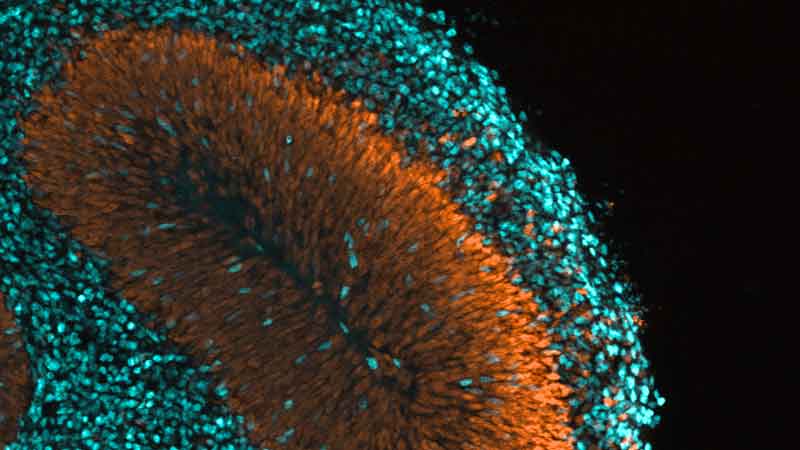
Together, the teams will use advanced three-dimensional organoid models to study cortex development in a dish and examine the mechanisms that shape it.
For the German part of the project, the Albert group will receive 475,000 € funding over three years. The project will not only strengthen ties between Dresden and South Korea but also help ensure that the CRTD remains at the forefront of international efforts to understand human brain development.
Source: CMCB News