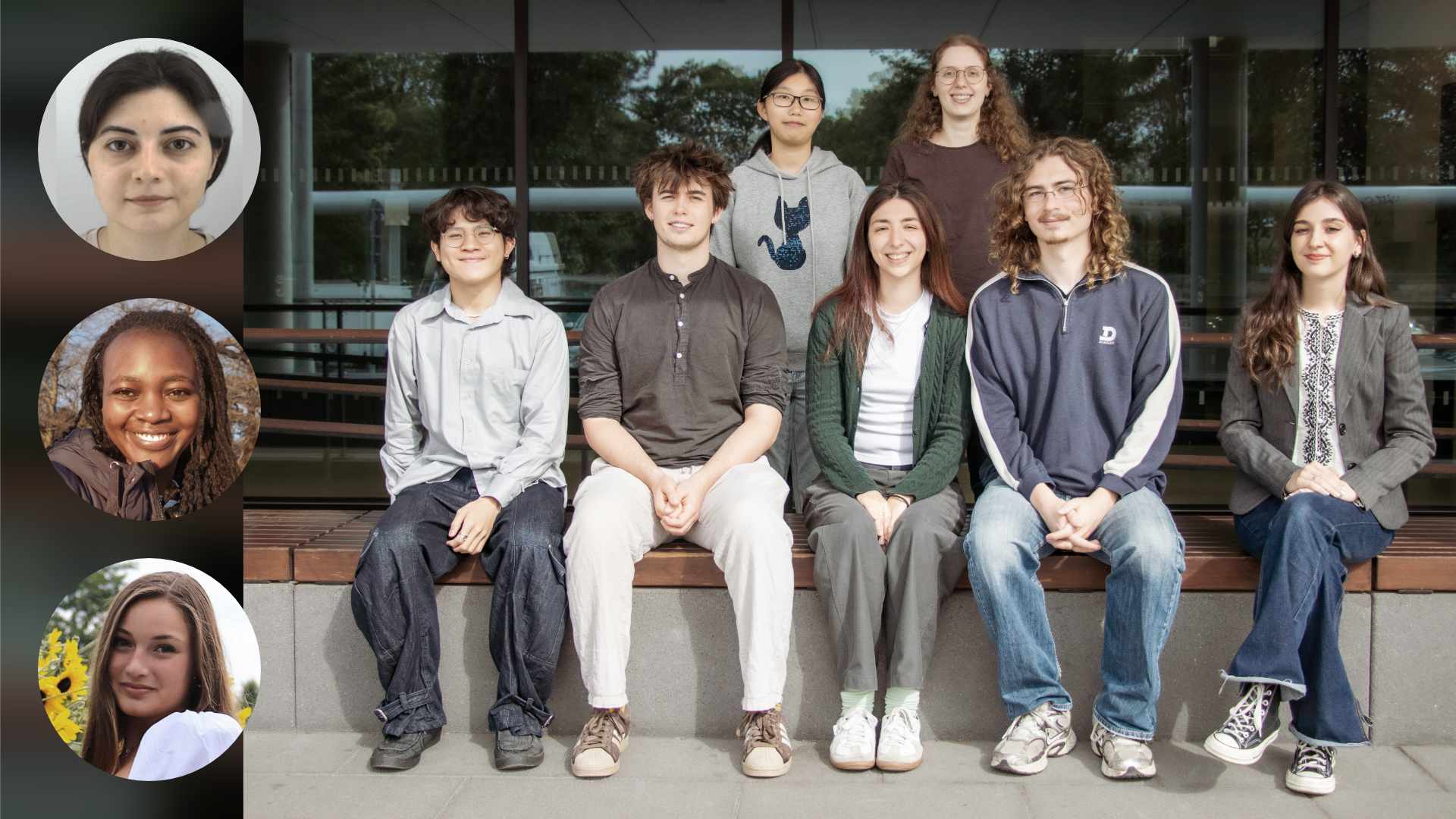
Between June and the end of August, twelve students started their Summer Research Internships in DIGS-ILS research groups. The students have been selected in a competitive application process to work on research projects in labs of DIGS-ILS group leaders. For twelve weeks they’ve been doing hands-on research but also get to know the Biopolis campus and the Dresden research community. We have asked them to tell us about their projects and why they chose to apply for a Summer Research Internship:
Arghavan Aslani
Shervin Safavi Group, TUD Medical Campus
Project: Understanding the neural and behavioral mechanisms of internal cognitive processes
I am a master's student in cognitive science. During my internship, I worked on bayesian models of perceptual bistability.
Jacob Beeson
Tian Qiu Group, DKFZ
Project: Wireless micro-sensors to monitor biomarkers for precise radiotherapy
Kristina Heins
Oliver Bruns Group, NCT/UCC
Project: Label-Free Autofluorescence Imaging of Nerves and Lymph Nodes for Intraoperative Guidance
I’m from Pittsburgh, Pennsylvania, where I study biomedical engineering at the University of Pittsburgh. My internship in the Bruns Lab at NCT/UCC Dresden gave me the opportunity to explore biomedical imaging in an international research environment and apply skills from my coursework to real-world biomedical research.
During my time in the lab, I worked on the autofluorescence of nerves, lymph nodes, and other tissues, using fluorescence spectroscopy and imaging techniques to investigate how naturally occurring tissue signals can be used for label-free visualization. I also gained experience with tissue preparation, staining, image processing, and imaging in an experimental operating room alongside surgeons and researchers.
This experience allowed me to see how biomedical engineering can connect research, imaging technology, and clinical applications. Working alongside scientists, students, and surgeons broadened my perspective on translational research and strengthened my interest in developing technologies that can ultimately improve patient care.
Adelya Khalitova
Charlotte Steenblock Group, TUD Medical Campus
Project: Effect of glucocorticoids on monocyte differentiation
My internship in Charlotte Steenblock’s lab focused on studying the immune response to elevated glucocorticoid levels. Monocytes and macrophages play a huge role in this response cells that are sensitive to glucocorticoid signaling and capable of changing their metabolic and functional profile in response to chronic excess of stress hormones.
My work was carried out within a Cushing’s syndrome model, where I was interested in finding out how the immune response changes. The main research question was how chronically high glucocorticoid levels affect the differentiation of monocytes into macrophages and their immunometabolic reprogramming.
The internship allowed me to develop skills in experimental design, learn new methods, and build on my existing knowledge base, as well as gave me a understanding of the direction I would like to pursue in my future scientific work!
Cristiana Oana
Anna Taubenberger Group, TUD BIOTEC
Project: Exploring the effect of dextran sodium sulfate-induced inflammation on intestinal cell mechanical properties
As a medical student with a background in research, I have long been interested in investigating the underlying processes of life and disease and I am grateful to have had the opportunity to do so here in Dresden.
During my time in Anna Taubenberger’s lab, I explored the effects of DSS-induced inflammation in the gut, using a bioengineered 3D in vitro intestinal model, consisting of colorectal spheroids in ECM mimicking hydrogels. Using Brillouin microscopy as a tool I was able to characterise changes in cells’ biophysical properties upon treatment, and through immunostaining I gained insight into the molecular changes taking place.
I always welcome with great joy any opportunities that bring me back to the core of science. This internship provided me with the space to further develop my scientific curiosity and lab skills, and to connect with like-minded people from all over the world, which I will be forever thankful for. Dresden has genuinely become a second home. I can only recommend applying to the program!
Natália Bianca Puglia Conde
Elias Barriga Group, TUD PoL
Project: Exploring adhesion independent electrotaxis in cancer cells
As a master’s student in Biosciences and Biotechnology at the University of São Paulo (USP), Brazil, my research focuses on Computational Medicinal Chemistry. Currently, my master's research focuses on finding novel anti-cancer agents. To achieve this, I employ molecular modeling tools, such as molecular docking and dynamics, to perform a high-throughput virtual pre-filter of promising compounds before laboratory testing. Furthermore, my work enables the integration of nanotechnology, exploring how these computational insights can be translated into rationally designed nanocarriers and targeted drug delivery systems.
My primary scientific drive is to bridge the gap between in silico predictive models and complex biological systems, cultivating a hybrid profile that translates structural insights into tangible biomedical applications. I am participating in the DIGS-ILS internship with the explicit goal of acquiring new knowledge. Currently, within Dr. Elias Barriga’s lab at the Physics of Life (PoL) cluster, my work directly investigates adhesion-independent electrotaxis in cancer cells. I hope to learn experimental methods to complement my computational background.
Leandro Ravael
Jan Brugués Group, TUD PoL
Project: Optimising chromatin perturbations in the early zebrafish embryo
I am attending the Brugués Lab, based at the Max Planck Institute of Molecular Cell Biology and Genetics during my internship. I work alongside a PhD student, Joana, contributing to the study of the material properties of chromatin during the Zygotic Genome Activation (ZGA). In early development, embryos initially rely on maternal factors before switching on their own genome through ZGA. Although this transition is essential for development, we still do not fully understand what triggers the maternal-to-zygotic switch. We use optical tweezers and fluorescence imaging to study chromatin while applying different drug treatments to alter its state and observe how this affects transcription. We are also developing an image-analysis pipeline to quantify changes in chromatin and transcription across different conditions. By combining mechanical measurements, live imaging, targeted chromatin perturbations, and quantitative analysis, the project aims to determine whether the physical properties of chromatin provide an additional layer of control over ZGA.
This summer has been wonderful. What I value most is being surrounded by Dresden’s strong biophysics community and learning from researchers who work across different systems with similar non-equilibrium states. The supportive research environment of Dresden allows serendipity to emerge through discussion and collaboration.
Faith Roseleader Onyando
Anke Fuchs Group, TUD CRTD
Project: Generation of stable FOXP3+ thymic regulatory T cells from paediatric thymuses
My project focused on thymus-derived regulatory T cells (Tregs), a specialized immune cell population with immunosuppressive properties being explored for cell therapies in autoimmune disorders and graft-versus-host disease. Using pediatric thymic tissue discarded during cardiac surgeries, I worked on isolating and characterizing thymic Tregs toward developing efficient off-the-shelf immunotherapies. Coming from a basic science background, I am grateful for the opportunity to gain exposure to translational research at CRTD. The collaborative research environment and the chance to connect with international interns made this a wonderful experience.
Karol Wojciechowski
Felix Müller-Planitz Group, TUD Medical Campus
I am pursuing a degree in Biological Therapeutics at the University of Warsaw. During my internship in the Felix Müller-Planitz Lab at TU Dresden, I had the chance to work on a project focused on developing a protocol for site-specific incorporation of unnatural amino acids into ISWI, a chromatin remodelling enzyme. This allows for precise fluorescent labelling of a target residue, enabling single-molecule FRET measurements via TIRF microscopy – a powerful approach to studying how ISWI interacts with nucleosomes and remodels chromatin. Understanding these mechanisms has clear relevance to cancer research, where chromatin dysregulation is a known driver of oncogenesis.
I highly recommend the DIGS-ILS Internship to anyone looking to grow as a researcher and meet people from across the scientific world!
Wenjin Zhou
Michele Solimena Group, TUD PLID
Project: Decoding Pancreatic Islet Connectivity: A Deep Learning Characterization of Islet Innervation
I am a final-year undergraduate student from The Hong Kong Polytechnic University. Throughout my studies, I have gradually developed a strong interest in computational approaches to biological research, particularly bioinformatics and biomedical image analysis.
During my internship in Dresden, I am working in the Solimena lab on a volume electron microscopy project focusing on pancreatic islets. My project involves the segmentation and characterization, combining 3D image analysis and deep learning. It allows me to gain new insights into how cells and tissues are organized and interact with each other, particularly from the perspective of connectivity.
It has been truly exciting to join in the DIGS-ILS Internship Program. It offers good opportunities to connect with fellow students from different backgrounds and become part of a vibrant international scientific community. I would highly recommend the program to students considering applying in the coming years.