Shady Sayed Group
Genome Editing for Precision Oncology – Translational lung cancer research

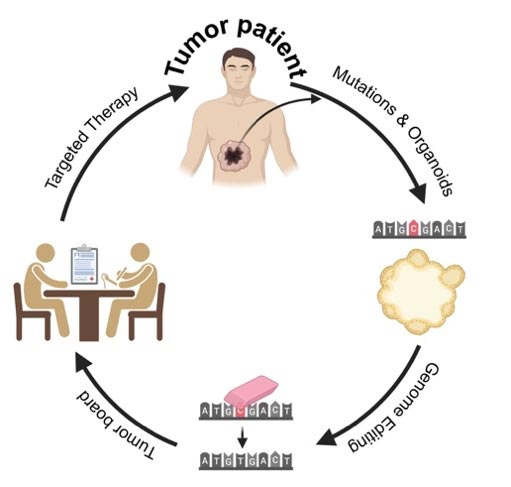
My research group aims to apply CRISPR-based mutation profiling and functional characterisation to patient-derived lung organoids to better understand mutation-driven vulnerabilities.
Lung cancer remains the leading cause of cancer-related mortality in the European Union, with approximately 249,000 deaths each year. More than half of patients are diagnosed with metastatic disease, necessitating systemic, drug-based therapies. Over the past decade, systemic treatment options for lung cancer have expanded rapidly; however, clinical responses are often incomplete and resistance to therapy frequently emerges, limiting long-term efficacy.
Our previous work have demonstrated that CRISPR-based genome editing can not only uncover previously unrecognized cancer-driving mutations, but also precisely correct oncogenic variants within their native genomic environment. Moreover, this approach enables the functional stratification of mutations in cancer driver genes, such as TP53, KRAS, and SMAD4, based on their contribution to cellular fitness. Meanwhile, although TP53 has long been considered “undruggable” due to its role as a transcription factor, the precise correction of mutant TP53 in its endogenous context offers a powerful strategy to restore its tumor-suppressive function. Interestingly, we have recently shown cellular depletion following TP53 mutation repair in various cell lines of different cancer origins and recently achieved in vivo repair of a TP53 hotspot mutation in a peritoneal cancer mouse model, leading to significant tumor regression. Extending this platform to lung cancer, the most prevalent type of cancer, offers a straightfoward extension toward clinical translation. Current work focuses on improving tissue-specific delivery using lipid nanoparticles and viral vectors to enhance feasibility. Importantly, this strategy is designed as a broadly applicable framework and shall serve as a blueprint for multiple cancer types, including pediatric, hematologic, and other solid malignancies.
Future Projects and Goals
- Screen nanocarrier delivery vehicles e.g. lipid nanoparticles, virus-like particles, across a panel of cancer organoids to profile cell-type specificity
- Tailoring therapies based on the response of cancer organoids to mutations repair, potentially leading to more effective personalised treatment regimens
- Evaluate drug sensitivity in lung cancer organoids after mutation repair
- In vivo molecular surgery by using CRISPR-technologies to repair tumor mutations in mouse models
Methodological and Technical Expertise
- CRISPR-Cas9 Technologies (design, execution & data analysis)
- Advanced Tissue Culture Models e.g. Patient-derived tumor/normal organoids
- Tumor Biology
- Functional genomics
- Viral vectors