More information
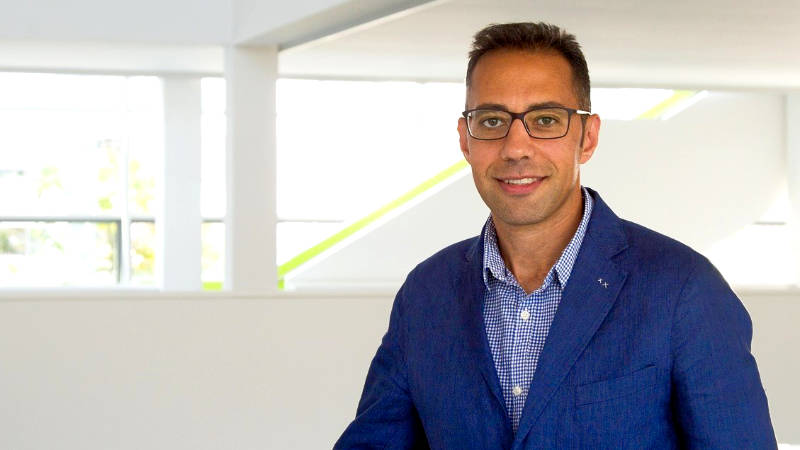
Portrait Mohamed Elgendy

“Energy and persistence conquer all things”
Benjamin Franklin

This quote is particularly true in the case of cancer. Cancer cells require dramatically high levels of energy and biomass to fuel their rapid growth. How tumors alter their metabolism to meet these high demands has always fascinated scientists. Cytosolic glycolysis and mitochondrial oxidative phosphorylation “OXPHOS” are the main energy-producing pathways. For decades, metabolic reprogramming of tumors was perceived as only increased glycolysis as postulated by Otto Warburg almost a century ago. This simplistic view has recently been challenged and revised as we started to realize that tumor metabolism is more heterogeneous than initially assumed.

Vision

We are fascinated by how tumors adapt their metabolism to flourish in a metabolically-harsh environment. We have just existed the era when tumor metabolism meant only Warburg Effect and we believe there is a room for ground-breaking discoveries in this field yet to be made. We aim to deeply understand metabolic reprogramming in tumors and to exploit this understanding to tailor novel therapeutic strategies.

Mission

Our group investigates different aspects of tumor metabolism. Particularly, we are interested to study how some tumors flexibly adapt their metabolism to overcome metabolic challenges during the course of tumorigenesis or in response to drugs targeting metabolic pathways. We aim to dissect molecular mechanisms of such metabolic plasticity. We also aim to unravel the contribution of metabolic adaptations to cancer cell’s metastatic potential and anti-cancer drug resistance, two most devastating processes in cancer management.

Mohamed Elgendy Research: Figure
Figure: Graphical abstract of the model of metabolic plasticity: Some tumor cells are equipped by yet-to-fully understand mechanisms that enable them to shuffle between alternative metabolic pathways to maintain the energy and biomass supply needed to fuel their rapid growth. Deeper understanding of such mechanisms will be essential to design novel therapeutic approaches targeting tumor metabolism.

Future Projects and Goals

  • How do the metabolic features of metastatic cells (seed) and microenvironment (soil) at different organs/sites contribute to organotropism? What is the contribution of “metabolic compatibility” between the seed and soil?
  • Can such compatibility be disrupted by pharmacological or dietary approaches or altered by pathology?
  • Why most anti-cancer therapeutics are active against certain tumors from specific tissues of origin? Does the metabolic signature of tumors determine the response/resistance to anti-cancer therapy?

Methodological and Technical Expertise

  1. General molecular and cellular biology techniques (e.g. Cell Culture, imaging, immunoblotting, qPCR, ..etc)
  2. Genome editing
  3. Metabolic analysis in vitro and in vivo
  4. Metabolomic and proteomic profiling  
  5. Mouse tumor models

CV

Since 2019
Group leader, Medical Clinic I, University Hospital Carl Gustav Carus, Faculty of Medicine, Institute for Clinical Chemistry and Laboratory Medicine, Technische Universität Dresden, Dresden, Germany

2019
Research fellow, Institute of Molecular Genetics, Prague, Czech Republic

2015–2018
INDICAR programme fellow – University of Vienna, Austria

2011–2015
Post-doc, European Institute of Oncology – Milan, Italy

2007–2011
PhD – Early stage researcher, EU-funded Marie Curie Research Training Network ApopTrain, Dept. of Genetics, Trinity College Dublin, Ireland

2007
MSc of Molecular Medical Biotechnology, Ghent University, Belgium

More Information

tu-dresden.de

Selected Publications

Wentao Gui, Petr Paral, Bhavuk Dhamija, Eman Hagag, Martin Dusa, Jana Humajova, Pavla V. Francova, Jan Kucka, Jan Pankrac, Caroline Schütz, Vasileios Armenis, Filippo Ferrucci, Mario Schubert, Kaomei Guan, Franziska Baenke, Daniel E. Stange, Lorenz H. Lehmann, Wolfram Weckwerth, Peter Mirtschink, Sofia Traikov, Giuseppe Belmonte, Clelia Miracco, Martin Bornhäuser, Saverio Minucci, Ludek Sefc, Libor Macurek, Mohamed Elgendy
MCL1 Modulates mTORC1 Signaling to Promote Bioenergetics and Tumorigenesis
Nat Commun 16(1), 10841 doi: 10.1038/s41467-025-66831-4 (2025)

Rani Pallavi, Elena Gatti, Tiphanie Durfort, Massimo Stendardo, Roberto Ravasio, Tommaso Leonardi, Paolo Falvo, Bruno Achutti Duso, Simona Punzi, Aobuli Xieraili, Andrea Polazzi, Doriana Verrelli, Deborah Trastulli, Simona Ronzoni, Simone Frascolla, Giulia Perticari, Mohamed Elgendy, Mario Varasi, Emanuela Colombo, Marco Giorgio, Luisa Lanfrancone, Saverio Minucci, Luca Mazzarella, Pier Giuseppe Pelicci
Caloric restriction leads to druggable LSD1-dependent 2 cancer stem cells expansion
Nat Commun 15(1):828 doi: 10.1038/s41467-023-44348-y (2024)

Elgendy M*, Cirò M, Mazzarella L, Ferrari E, DeCensi A, Bonanni B, Janssens V, Pelicci PG, Foiani M, Minucci S*
Combination of hypoglycemia and metformin impairs tumor metabolic plasticity and growth by modulating PP2A-GSK3ß-MCL-1 axis
Cancer Cell 35(5):798–815.e5 doi: 10.1016/j.ccell.2019.03.007 (2019)

Elgendy M, Pablo Fusco JP, Segura V, Lozano MD, Minucci S, Echeveste JI, Gurpide A, Andueza M, Melero I, Sanmamed M. F, Ruiz MR, Calvo A, Pascual J.I, Velis J. M, Miñana B, Pio R, Agorreta J, Patiño A, Jose Luis Perez-Gracia JL
Identification of mutations associated with acquired resistance to sunitinib in renal cell-cancer
Int J Cancer 145(7):1991–2001 doi: 10.1002/ijc.32256 (2019)

Elgendy M*, Abdel-Aziz AK, Renne SL, Bornaghi V, Procopio G, Colecchia M, Kanesvaran R, Toh CK, Bossi D, Pallavicini I, Perez-Gracia JL, Lozano MD, Giandomenico V, Mercurio C, Lanfrancone L, Fazio N, Nole F, Teh BT, Renne G, Minucci S*
Dual modulation of MCL-1 and mTOR determines the response to sunitinib
J Clin Invest 127(1):153–168 doi: 10.1172/JCI84386 (2017)

*Co-corresponding authors

Contact

Technische Universität Dresden
Medizinisch Theoretisches Zentrum (MTZ)
Dr. Mohamed Elgendy
Fetscherstrasse 74
01307 Dresden