Gianaurelio Cuniberti Group
Nanomaterials and AI for Life Tech
Nanoelectronics for biosensor technologies
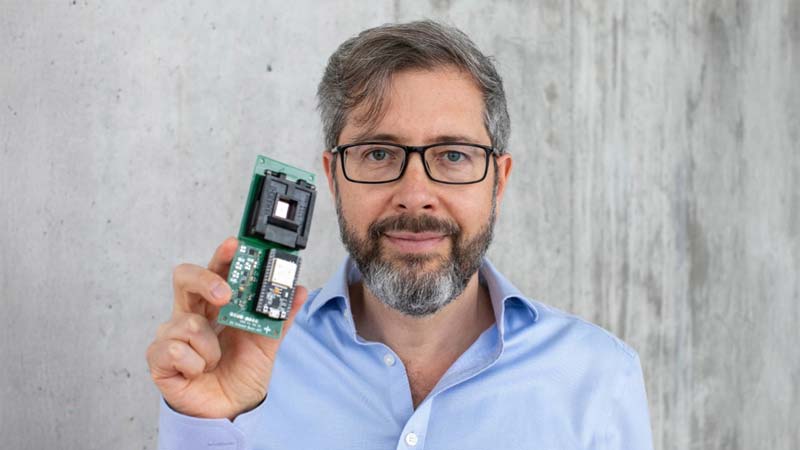
We develop miniaturized, biocompatible sensor platforms that bring cutting-edge nanotechnology into real-world applications. By integrating advanced materials, microfluidics, and smart data analysis, our devices enable label-free, continuous monitoring of biological and chemical parameters — even in vivo. From healthcare diagnostics, such as infectious disease detection, cancer screening, hormone-level monitoring, or stress biomarker assessment, to environmental monitoring, our goal is to transform sensor innovations into reliable, user-friendly tools that make a tangible impact. By covering the full chain from material synthesis to device validation, we aim to not only detect target analytes but also uncover new sensing phenomena at the nanoscale. Our vision is to bridge laboratory breakthroughs with real-world needs in healthcare, environmental monitoring, and beyond.
Digital olfaction
Olfaction is an evolutionary old sense, which provides unique and sophisticated access to information of our surroundings. It is not only crucial for appetite and taste, but also plays an important role in social interactions, such as bonding with family members or the partner. The sense of smell also warns us of dangerous substances - whether gas or fire or spoiled food. In fact, people are even able to infer the state of health or emotions of others based on their body odor. The digitization of olfaction therefore promises to drive a "next generation" of artificial intelligence, which could impressively help shape the smart phones or smart homes of the future, among other things. In addition, artificial noses, also known as "eNoses", have applications in numerous health applications, e.g. for people with olfactory disorders, which make up to ~20% of the population – even before COVID times. The aim of our research in various projects is to enable the digitization of olfaction in an innovative and highly interdisciplinary setting. Compared to the visual and auditory senses, which have long since found their way into artificial intelligence applications, such as intelligent image recognition and voice assistants, the sense of smell is comparatively poorly understood. To change this, machine learning plays an important role: on the one hand, for the intelligent discovery and prediction of complex chemical interactions of smelling substances. On the other hand, and in particular, for the imitation of human perception of smells, which is also significantly influenced by factors such as experience with the smell, bodily states such as hunger or characteristics of one's own personality.
Environmental nanotechnology
We are actively engaged in advancing environmental nanotechnology, focusing on the development of nanomaterials and nanoscale processes contributing to sustainability and environmental protection. Research activities include the design of nanostructured catalysts for energy conversion and water purification, and nanomaterial-based sensors for detecting pollutants and monitoring environmental changes. By combining experimental synthesis, in situ characterization, and computational modeling, we aim to understand and optimize the interactions between nanomaterials and biological and natural systems.
Computational materials science
Methods for materials modelling on different length scales range from ab-initio DFT calculations of the electronic structure and of chemical reactions up to simulations of diffusion processes and the determination of macroscopic material properties of complex materials within the framework of continuum models by applying finite difference and finite element techniques. A strong emphasis is put on the development of novel methodologies leveraging machine learning techniques for the fast and accurate investigation of physicochemical properties of materials.
Future Projects and Goals
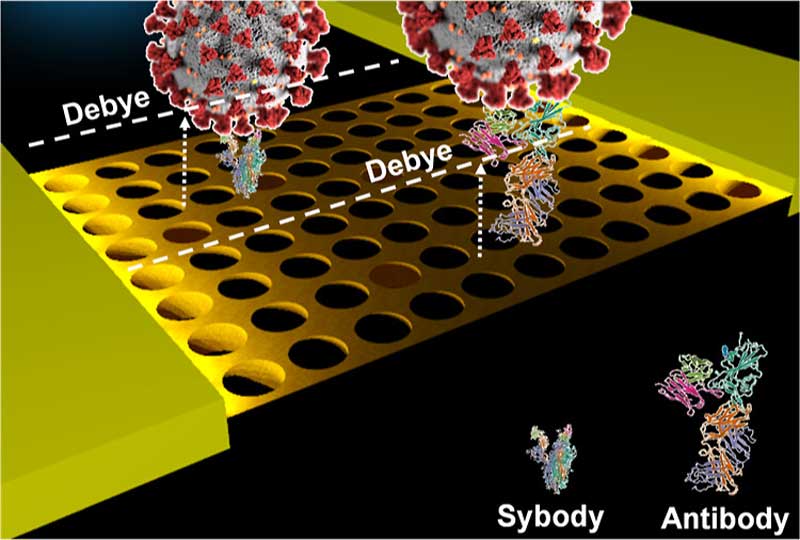
In the future, we are expanding our research activities at the intersection of nanotechnology and life sciences. Future projects aim to develop functional nanomaterials and hybrid bio-interfaces that can interact with biological systems in a controlled and sustainable way. These include nanostructured scaffolds, biodetection platforms for medical diagnostics and biocompatible materials for sensing or targeted drug delivery.
A key goal is to strengthen interdisciplinary collaboration between materials science, biology, and medicine — fostering innovation in bio-nanotechnology, biomimetic systems, and molecular-scale engineering. By integrating experimental approaches with computational modeling and AI-driven materials design, we aim to accelerate discoveries that support next-generation healthcare technologies and sustainable biomedical solutions.
Methodological and Technical Expertise
Our group offers broad methodological and technical expertise spanning the synthesis, characterization, and modeling of advanced materials across multiple length scales. The laboratories at our chair and available at cooperating institutions are equipped for nanofabrication involving advanced lithography methods, thin-film deposition, and atomic-scale imaging using techniques such as electron microscopy, scanning probe microscopy, and spectroscopy. We combine experimental and computational approaches, including multiscale simulations, machine learning–assisted materials design, and molecular modeling, to understand and tailor material properties.
This integrated methodological framework enables the precise design of functional nanostructures for applications in electronics, energy systems, and, in particular, life sciences, supporting both fundamental research and technological innovation.